

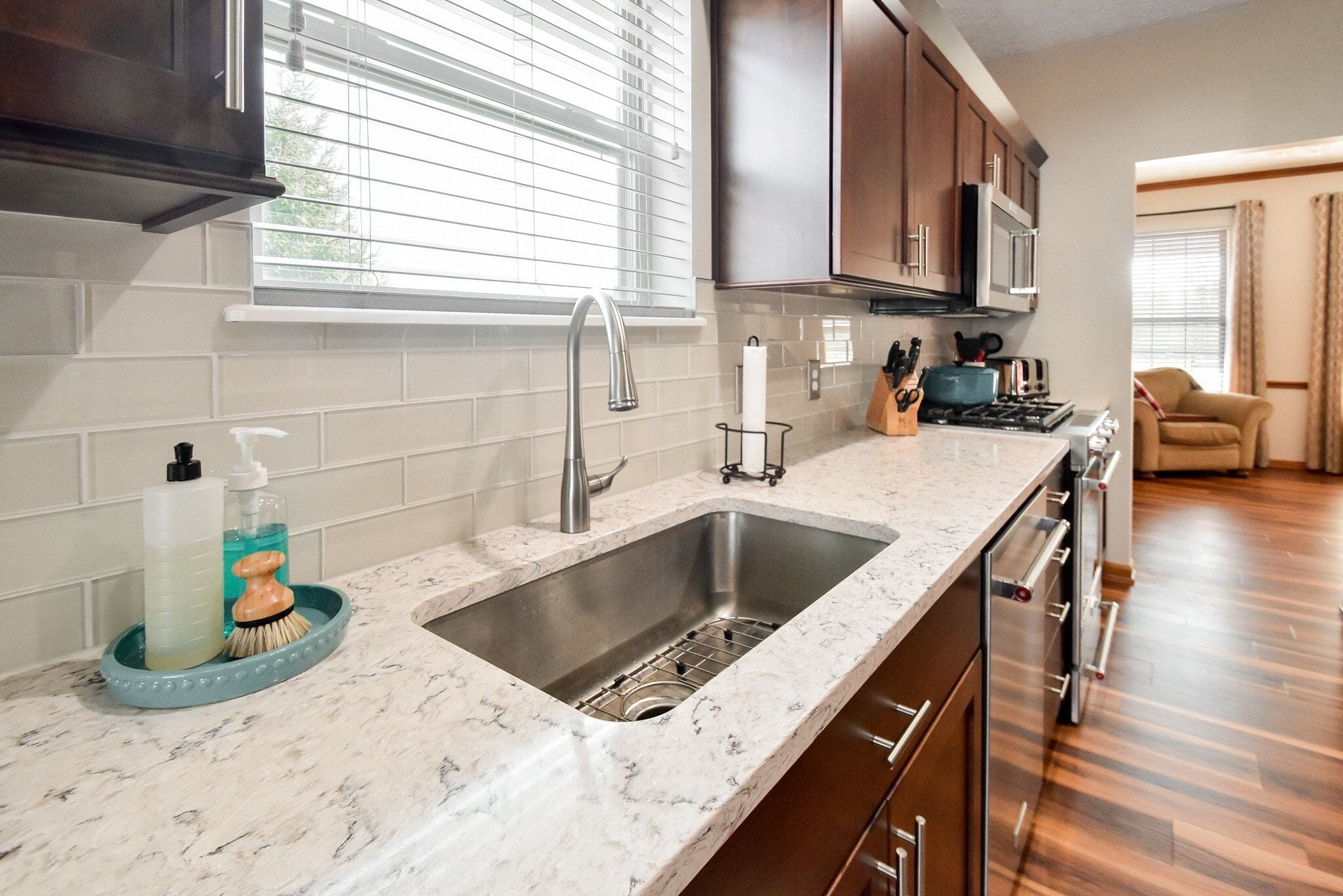
Touchless faucets are a cool new technology but are they all they are cracked up to be?
During a kitchen remodel, small choices can make a big difference in how the space looks and works. One common decision is whether to choose a touch or touchless kitchen faucet.
At JSB Home Solutions, we help make remodeling decisions easier by balancing style, function, budget, and long-term value. Our team understands how the right fixtures can improve everyday use and complete the overall look of a kitchen.
This article compares both options, including how they work, their pros and cons, maintenance needs, installation considerations, and which faucet may be the better fit for your kitchen.

What is a Touch Kitchen Faucet?
A touch kitchen faucet is a faucet that turns on and off when you physically touch part of the faucet, usually the spout or handle. Instead of fully turning the handle every time, you can tap the faucet with your hand, wrist, or forearm to start or stop the water.
This can be helpful during cooking or cleanup when your hands are messy from food prep, soap, or dishes. For example, if you are handling raw chicken or have dough on your hands, you can tap the faucet with your wrist instead of grabbing the handle.
From a kitchen remodel perspective, a touch faucet is often considered a convenience upgrade. It gives the kitchen a more modern feel, but it may cost more than a standard pull-down faucet.
Benefits of Touch Kitchen Faucets.jpg?width=437&height=289&name=Blair%2c%20Jacki%20%26%20Dave%20-%20SK%20Prof%20After%20(10).jpg)
A touch kitchen faucet can be a smart upgrade during a kitchen remodel because it adds convenience, function, and a more modern feel. With a touch faucet, you can tap the spout or handle with your hand, wrist, or forearm to turn the water on and off.
Touch kitchen faucets are helpful when cooking, baking, washing dishes, or handling messy ingredients. A touch faucet can also help keep the sink area cleaner because you do not need to grab the faucet handle as often.
For homeowners comparing standard, touch, and touchless kitchen faucets, a touch faucet is often a practical middle-ground option. It offers added convenience without going fully hands-free, making it a popular choice for many kitchen faucet upgrades.
 Things to Consider Before Choosing a Touch Faucet
Before choosing a touch faucet for your kitchen remodel, it is important to consider long-term use and maintenance. Because this faucet style includes a hose, spray head, and retraction system, some parts may wear down over time. In some models, the spray head may not retract properly or may begin to droop.
A touch kitchen faucet also requires hands-on use. When cooking, cleaning, or handling messy ingredients, touching the faucet handle can spread water, grease, or food residue around the sink area.
That being said, touch faucets are becoming a common type of kitchen faucet used in remodels today.
 What Is a Touchless Kitchen Faucet?
A touchless kitchen faucet uses a built-in motion sensor to turn the water on and off without touching the handle. This hands-free faucet option is especially helpful during cooking, cleaning, and food prep when your hands are messy.
Touchless kitchen faucets are chosen for kitchen remodels because they add convenience, help reduce mess around the sink, and create a modern, updated look.
 Benefits of Touchless Kitchen Faucets
A touchless kitchen faucet can add convenience, cleanliness, and a modern feel to your kitchen remodel. Because the faucet turns on and off with a motion sensor, it helps reduce contact with the handle when your hands are dirty from cooking, cleaning, or food prep.
Touchless faucets can also help conserve water by making it easier to turn the water off between tasks. For busy kitchens, this hands-free feature can be especially helpful. It creates a more high-end look while making everyday use feel easier and more efficient.
Things to Consider Before Choosing a Touchless Faucet
Before choosing a touchless faucet for your kitchen remodel, it is important to think about cost, installation, and maintenance. Touchless kitchen faucets usually cost more than standard faucets and may require batteries or an electrical connection to power the sensor.
Because touchless faucets include more technology, there are also more parts that may need attention over time. Sensors can sometimes be too sensitive or not sensitive enough, which may require adjustments, cleaning, or troubleshooting.
 Which Kitchen Faucet Is Easier to Maintain?
When comparing a touch faucet vs. a touchless kitchen faucet, maintenance is an important factor to consider. A kitchen faucet is typically easier to maintain because it has fewer electronic parts. Most upkeep involves cleaning the spray head, checking the hose, and making sure the pull-down sprayer retracts properly.
A touchless kitchen faucet may require more maintenance because it uses motion sensor technology. Depending on the model, you may need to replace batteries, clean the sensor, check the power connection, or troubleshoot the faucet if the sensor becomes too sensitive or does not respond.
For a low-maintenance kitchen faucet, a touch faucet is often the simpler choice. However, a touchless faucet can still be a great option for a kitchen remodel if you want hands-free convenience and a more modern sink area.
How Do Touch and Touchless Faucets Compare in Price?
From a remodel perspective, touch faucets usually cost a little less than touchless faucets, but both are considered upgraded kitchen faucet options.
A touch kitchen faucet with professional installation will usually cost around $450 to $1,000. A touchless kitchen faucet with professional installation will usually be around $1000 to $2,000+.
The installation cost depends on the setup under the sink. When considering this for your remodel, the easiest way to think about it is this: a touch faucet may add a few hundred dollars to the remodel budget, while a touchless faucet may add a little more because of the sensor technology and possible electrical or battery setup. The
When a Touch Kitchen Faucet May Be the Better Choice
A touch kitchen faucet may be the better choice if you want a reliable, flexible faucet that is easy to use for everyday cooking, cleaning, and rinsing. This style has a spray head that pulls directly down into the sink, giving you more control for common kitchen tasks.
A touch faucet may be the better option if:
- You want a reliable everyday faucet: touch faucets are simple, dependable, and easy to use for daily kitchen tasks.
- You are working with a tighter budget: Touch kitchen faucets are often more affordable than touchless faucet options.
- You prefer simple operation: This style does not require motion sensors, batteries, or electrical connections.
- You want fewer electronic parts: With fewer technology-based components, there may be less troubleshooting over time.
.jpg?width=521&height=345&name=Carr%20%20SK%20Prof%20After%20(6).jpg) When a Touchless Kitchen Faucet May Be the Better Choice
When a Touchless Kitchen Faucet May Be the Better Choice
A touchless kitchen faucet may be the better choice if you want a modern, hands-free faucet that adds convenience during cooking, cleaning, and food prep. This style uses a motion sensor to turn water on and off without touching the handle.
A touchless faucet may be the better option if:
- You want a more modern kitchen upgrade: Touchless faucets can give the sink area a sleek, updated, high-end look.
- You cook often and want hands-free convenience: The motion sensor makes it easier to turn water on and off when your hands are messy.
- You have kids who leave faucets running: Touchless faucets can help reduce wasted water by making shut-off easier.
- You want to reduce mess on handles: Since you do not need to touch the faucet as often, it can help keep the handle and sink area cleaner.
- You are already planning electrical or plumbing updates: A kitchen remodel can be a good time to add a touchless faucet, especially if power access or plumbing adjustments are already part of the project.
Installation Considerations During a Kitchen Remodel
When choosing a kitchen faucet for a remodel, it is important to make the decision before installation begins. The faucet needs to work with the sink, countertop, plumbing, and overall kitchen layout.
A touch kitchen faucet is usually a straightforward installation, but it still needs enough clearance and the right sink setup for the spray head and hose to work properly. A touchless kitchen faucet may require additional planning because it can need battery placement, power access, sensor clearance, or specific sink and countertop compatibility.
Working with a remodeling professional can help make sure your faucet is installed correctly and functions the way it should. At JSB Home Solutions, we help plan these details ahead of time so your kitchen remodel looks great and works well for everyday use.
 Ready to Make Your Kitchen Faucet Dreams Come True?
Both kitchen faucets and touchless kitchen faucets can be great options for a kitchen remodel. A touch down faucet offers reliable function and flexibility, while a touchless faucet adds hands-free convenience and a modern feel.
The best choice really comes down to your budget and goals. If you have a higher budget and germ control is a priority, you should choose the touchless faucet. If your budget is tighter and you prefer simple components to high-tech, you should choose the touch kitchen faucet.
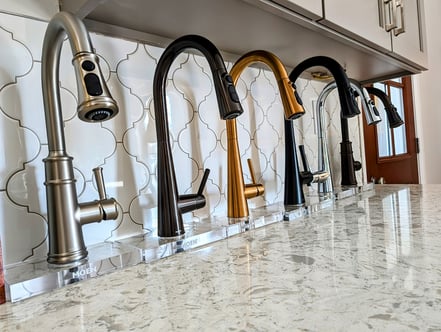
Stopping by a showroom and checking out the selections is a great place to start as you begin to narrow down some of the details of a remodel project. If you are planning a kitchen remodel, JSB Home Solutions can help you choose the right faucet, fixtures, and finishes for a kitchen that looks great and works well for your needs.
Contact JSB Home Solutions today to schedule a kitchen remodel consultation.


Topics:
