

.png)
Can You Move a Toilet During a Bathroom Renovation?
Planning a bathroom renovation comes with a lot of decisions—and one of the most common questions homeowners ask is whether they can move the toilet. While it might seem like a simple layout change, moving a toilet can have a bigger impact on your project than you expect.
With decades of bathroom remodeling experience, JSB Home Solutions has helped homeowners navigate everything from relocating toilets to deciding when it’s best to leave them in place. With expertise in both design and construction, we understand how layout changes impact cost, function, and overall project success. In this guide, we’ll walk you through the key factors to consider before deciding whether moving your toilet is the right choice for your remodel.
In this article, you’ll learn when moving a toilet makes sense, what it actually involves, how much it can cost, and smart alternatives to consider so you can move forward with confidence.
-
Is It Possible to Move the Location of a Toilet During a Bathroom Remodel?
-
Smart Alternatives to Moving a Toilet in my Bathroom Renovation
Before You Move a Toilet: Understanding What’s Involved
Before we jump in, let’s set the stage for what all is involved with your toilet setup. Moving a toilet isn’t just about shifting the fixture—it means working with the plumbing system behind and beneath it.
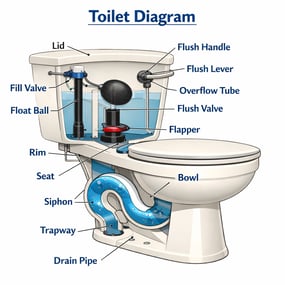 The Anatomy of a Toilet
- Toilet Flange: This connects the toilet to the drainpipe and secures it to the floor. It also creates a seal to prevent leaks and odors.
- Drainpipe (Waste Line): The pipe that carries waste away from the toilet. Its size, slope, and position play a major role in whether a toilet can be moved easily.
- Soil Stack (Main Drain Stack): This vertical pipe connects your bathroom plumbing to the main sewer line. The closer your toilet is to the stack, the easier and more cost-effective it typically is to relocate.
- Water Supply Line: Brings clean water into the toilet tank. This is usually easier to adjust than the drain, but still part of the overall planning.
- Vent Pipe: Allows air into the plumbing system to keep water flowing properly and prevent suction or slow drainage.
Why Does This Matter for My Remodel?
.png?width=275&height=260&name=Untitled%20design%20(23).png)
Each of these components works together, and moving a toilet means adjusting some—or all—of them. That’s where complexity (and cost) can increase quickly.
Understanding how your toilet is connected helps you make a more informed decision about whether a layout change is simple, or something that requires more planning and investment.
Is It Possible to Move the Location of a Toilet During a Bathroom Remodel?
The short answer is, yes, it is possible to move a toilet and during a bathroom remodel is the smartest time to do it. However, moving the toilet isn’t always the best use of the renovation budget. It is going to depend heavily on your project goals. Some of the most common reasons to move a toilet include:
- Creating better flow in a small space
- Making room for a larger vanity or double sink
- Expanding a shower or adding a freestanding tub
- Fixing an awkward or outdated layout
Sometimes, moving the toilet is the key to making the entire bathroom feel more functional and intentional.
How Do You Move a Toilet?
Moving a toilet involves more than just changing its position in the room. It requires relocating the drain line and water supply, accessing the floor—whether that means cutting into the subfloor or breaking into a concrete slab—ensuring proper venting, and sometimes working around structural elements.
It’s not as simple as “sliding it over.” This is a true behind-the-walls project, which is why planning and expertise matter from the start.
How to Move a Toilet Over 3–6 Inches
Small adjustments like this are often the most manageable. In many cases, the drain can be slightly repositioned without major structural changes—especially if you’re working with a wood subfloor. This type of move is typically done by adjusting the flange and making minor plumbing modifications.
What to expect:
- Moderate labor, but usually less invasive
- Flooring will need to be opened up
- More cost-effective than larger relocations
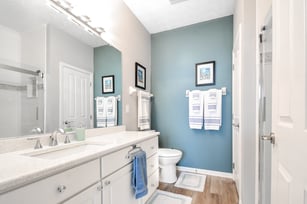 How to Move a Toilet 1–5 Feet or More
Larger moves quickly increase in complexity. Relocating a toilet this far usually requires rerouting the drain line, adjusting the slope, and potentially modifying the connection to the main stack. This often involves opening up floors—and sometimes ceilings below.
What to expect:
- More extensive plumbing work
- Higher cost due to labor and materials
- Greater impact on the project timeline
Bottom line: the farther you move a toilet, the more planning, cost, and coordination it requires—so it’s important to weigh the benefit of the new layout against the added complexity.
.png?width=220&height=328&name=Small%20Bathroom%20%20(2).png) Can You Move a Toilet on a Concrete Slab?
Can You Move a Toilet on a Concrete Slab?
Yes—but it’s more labor-intensive. Moving a toilet on a concrete slab typically requires cutting into the concrete to access and reroute the plumbing, which adds both time and cost to the project.
Because of the extra work involved, this is often the point where many homeowners pause and rethink whether a layout change is truly worth it. A knowledgeable contractor can help you weigh your options and decide if the investment makes sense for your space and goals.
How Difficult is Relocating a Toilet in a Bathroom Remodel?
Use the table below to get a clearer idea of what impacts the level of difficulty and what to expect based on your specific situation.
|
Distance Moved |
Level of Complexity |
What’s Involved |
|
3 - 6 inches |
Low |
Minor adjustments to existing plumbing; often no major structural changes needed |
|
1–5 feet |
Moderate |
Reworking sections of the drain line and water supply; more labor and planning |
|
Across the bathroom |
High |
Significant plumbing relocation, venting updates, and possible floor modifications |
Relocating a toilet can range from a simple adjustment to a complex project. The key to deciding whether or not to move the toilet in a remodel involves understanding how your layout, plumbing, and goals all come together—so you can make a decision that fits your budget and avoids surprises.
 How Much Does It Cost to Move a Toilet?
The cost to move a toilet can vary quite a bit depending on how far you’re moving it and what’s involved behind the scenes.
- Minor move ($500–$1,500):
Small adjustments to the existing plumbing with minimal floor access. This is typically the simplest and most budget-friendly option. - Moderate move ($1,500–$3,500):
Requires relocating portions of the drain line and water supply. More labor and coordination are involved, especially if the flooring needs to be opened up. - Major relocation ($3,500+):
A full reconfiguration of plumbing, often including structural considerations and more extensive floor work. This is the most complex and costly scenario.
 What factors impact the cost to move a toilet during a bathroom remodel?
Several factors can influence where your project falls within these ranges:
- Foundation type: Moving plumbing in a concrete slab is more labor-intensive than in a crawl space
- Age of plumbing: Older systems may need to be updated to meet current codes
- Permit requirements: Inspections and permits can add both time and cost
- Labor complexity: The more cutting, access, and coordination required, the more the project will cost
Even a small layout change can affect multiple parts of your remodel, which is why it’s so important to plan ahead and understand the full scope before getting started.
.png?width=239&height=357&name=Small%20Bathroom%20%20(1).png) Bathroom Remodel Permits and Plumbing Codes to Know
Bathroom Remodel Permits and Plumbing Codes to Know
Most toilet relocations require permits and must meet local plumbing codes, including proper venting to ensure everything functions safely and correctly.
Just like with many decisions in this process, talking with your contractor is key. An experienced team will handle permits, ensure everything is up to code, and coordinate the details behind the scenes—so you don’t have to think about the permit process at all.
 Smart Alternatives to Moving a Toilet in my Bathroom Renovation
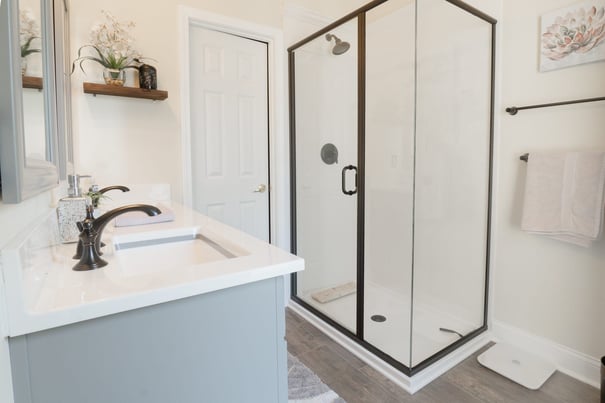
If moving the toilet doesn’t make sense for your project, there are still plenty of ways to improve your bathroom’s layout and functionality.
Reconfiguring the vanity or adding smarter storage can instantly make the space feel more efficient, while upgrading the shower or tub often creates a bigger visual and functional impact without the need to relocate plumbing.
You can also use simple design strategies—like better lighting, well-placed mirrors, and thoughtful layout adjustments—to make the room feel more open and balanced. Often, these types of changes deliver the result you’re looking for without the added cost and complexity of moving a toilet.
Working With the Right Contractor Matters
When it comes to moving a toilet—or any bathroom remodel—the contractor you choose can make all the difference. Layout changes involve plumbing, permits, and precise planning, and having an experienced team ensures everything is done correctly from the start.
A reputable contractor will:
- Provide clear, upfront pricing so you understand the full scope
- Handle permits and inspections to keep your project compliant
- Coordinate plumbing, flooring, and timelines to avoid delays
- Identify potential issues early—before they turn into costly surprises
 Is Moving a Toilet Right for Your Bathroom Remodel?
Moving a toilet is absolutely possible—and in some cases, it’s exactly what your bathroom needs to function better. The key is finding the right balance between cost, functionality, and long-term comfort. When those three things align, you’re not just improving how your bathroom looks—you’re improving how it works for your everyday life.
It typically makes sense to move your toilet when:
- You’re already doing a full remodel: If walls and floors are already being opened up, it’s the most efficient time to make layout changes
- The current layout truly doesn’t function: Awkward spacing, tight walkways, or poor placement can impact how the room feels and works
- The upgrade significantly improves usability: If the new layout makes the space more comfortable, open, or practical, it can be well worth it
You may want to reconsider moving your toilet if:
- Your remodel is mostly cosmetic: If you’re updating finishes but not changing the overall layout
- Your budget is tight: Plumbing changes can quickly add cost
- The current layout works “well enough”: It may not be perfect, but it’s functional
A well-planned remodel starts with the right team in place. From providing accurate upfront pricing so you understand the full scope before work begins, to handling permits and inspections to keep everything compliant, an experienced contractor helps guide the entire process. Use our Company Comparison Guide to help you find the right contractor for your project.
Working with a trusted team—like JSB Home Solutions—means everything is thoughtfully planned from the start, so there are no surprises once your project is underway.


Topics:
